News
Greg Price & the Gamble Foundation: A Closer Look at Purpose-Driven Giving
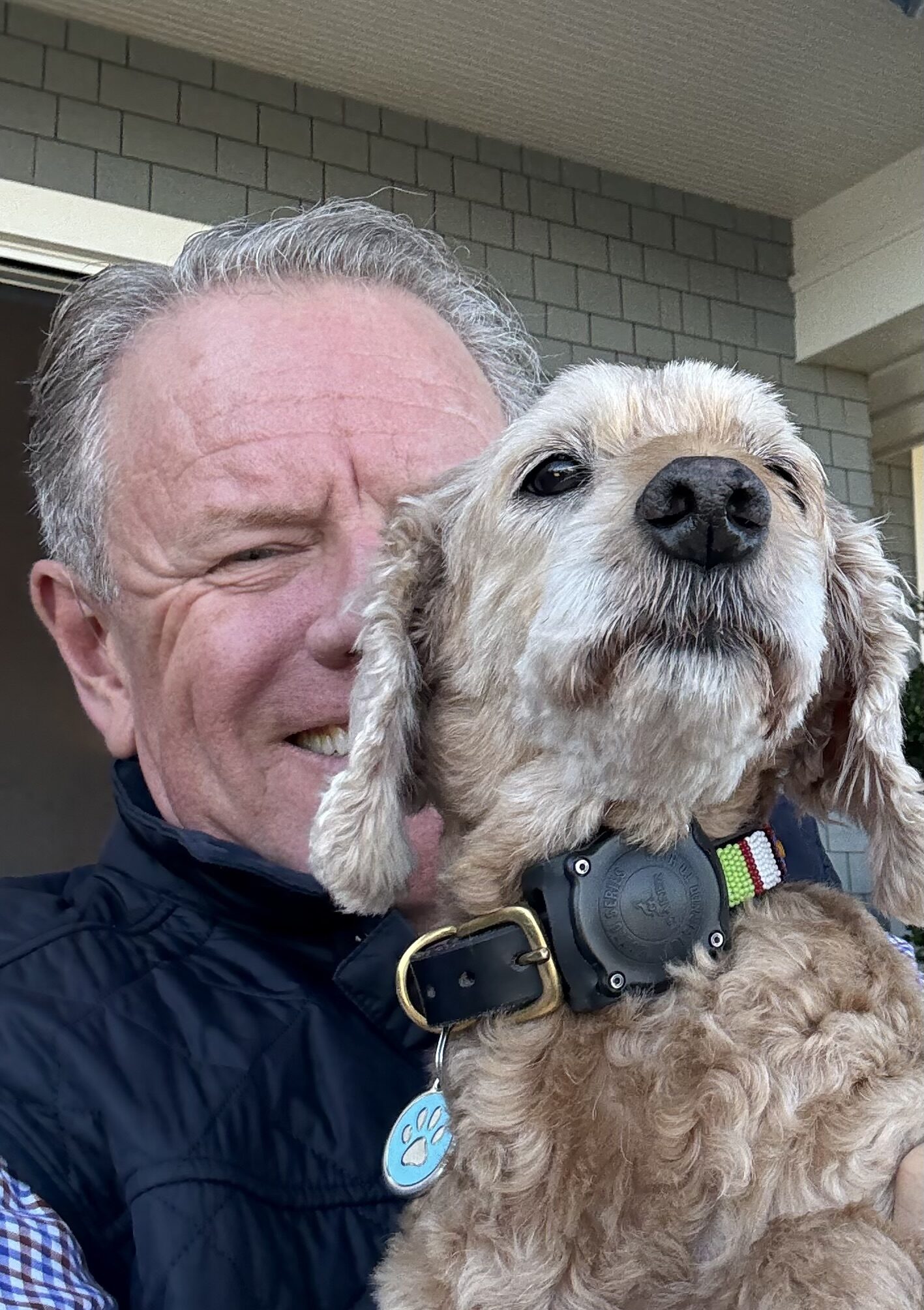
In this conversational interview, Greg Price, President of the Gamble Foundation, reflects on the evolution of the nearly six-decade-old Bay Area family foundation — from its early focus on the arts and youth development in San Francisco to more recent focus on regenerative agriculture. A longtime client of Pacific Foundation Services (PFS), Greg is a champion for open learning and collaboration with others, third-party management and support, and new capacity-building efforts for both Family Foundations and for the grantees they serve.
- Can you tell us about the Gamble Foundation? What does the Foundation do?
We are a family foundation, started here in the Bay Area in 1968, so almost six decades ago. It has grown in a number of different ways. Initially, for the first 30 years or so, it was just my father-in-law, my wife's uncle, and my wife's grandmother who ran it, mostly focused on the arts. Then, around the 90s or so, they started moving into other issues and areas that needed help – housing, health, youth education, and job training. Around 2000, the next generation came in, (this is the generation of my wife and me) and the focus became more toward youth development and finding alternative pathways for kids that weren't going to go to college. We funded a lot of great organizations in San Francisco.
I came on board officially in 2010, and the work was mostly in San Francisco in youth development.
In 2017, we shifted. Our practice has been to refine or change our theme every five years or so. In 2017, we focused on regenerative agriculture, which is leveraging natural systems to make soil healthy. Because if soil's healthy, then you don't need to augment it with expensive chemicals. Thus, the crops are happier, the animals are happier, and it's better for the whole system. Plus, it's cheaper and more productive, and we’re even seeing greater yields! There’s also a long history in the family of land stewardship, which goes back to my wife's grandfather and includes decades of ranching and farming. This legacy has been there for a great while, so it seemed like a natural fit to shift to organizations that were more aligned with the family's interests and passions.
We give out grants once a year. We tend to focus on smaller organizations that don't have the bigger funders to fund them yet. We tend to support those organizations for many years, and eventually graduate them once they reach a certain size. There's not a specific criteria, but this allows us to make room for smaller organizations.
I understand that The Gamble Foundation was one of the first customers of PFS. So very wisely, the previous generation thought, ‘why not get professional managers to manage it?’
Separately, I'm also a part of a group that I joined during COVID: Forward Global, it is fantastic. I learned a lot from the group and I’ve brought a lot of those insights into the leadership I hold at the Foundation. But one of the things that I'm constantly talking about when meeting with folks that are managing their own foundations, is to work with a third party. It’s like…You have a lawn. Do you mow your own lawn? No. Why wouldn’t you work with people that know what they're doing? And more importantly, are able to provide a high level of professionalism and insight when you need it most – like when you're going through your granting cycle. Many family foundations can't support a full-time person, and if they could, that full-time person is going to be overloaded during those intense periods. We’re fortunate enough to work with a small team of two or three people from PFS during our intense granting period. Plus, we know they're supporting other foundations, which is great, because then they can share best practices across those foundations. It works beautifully.
We continue to fund mostly in the Greater Bay Area – Napa, Sonoma, San Francisco, Marin, and then we've extended that out as we've been introduced to some great organizations down in the Salinas Valley. But we are mostly centralized to the counties around the Bay.
- How did you get involved with the Foundation? What spearheaded your involvement with philanthropy generally?
Before I met Aimee, I was involved in different boards with the San Francisco Zoo and the San Francisco Opera and contributed in leadership roles. After working in tech for a number of years and then consulting, I flipped to the nonprofit space. A friend introduced me to this nonprofit that wanted my consulting, so I started a pro bono engagement at first and then they brought me on. That was VolunteerMatch.org, which at the time was the largest network connecting volunteers with nonprofits. I supported their transition to be financially independent by selling our services to large companies that wanted to get their employees engaged. This became the revenue engine to support its public service, which connected millions of volunteers and offered free tools to nonprofits. It was a lot of fun.
If you work within a nonprofit or even sit on a board, you have a very different perspective than if you're a funder. Having worked in the corporate world and then at a nonprofit, the family asked if I would be willing to support the Foundation. That was 15-ish years ago now. I’m honored to bring many different perspectives and ask questions you wouldn't know to ask unless you had that perspective. It’s a huge responsibility, but it's highly rewarding.
- Can you tell us (more) about how trust-based philanthropy informs your approach at the Gamble Foundation? Are there other fundamental values or approaches informing your grantmaking?
The family has always worked within a trust-based philanthropy approach, long before the term was coined. We view it more as an ethos of how to make this easier for the grantee. Why do we need to have a 15-page application when we can keep it very simple? We strive to be upfront and transparent about what our themes are and our giving criteria, so that organizations can self-select. Our approach has definitely refined because of PFS’ support. With their assistance, we’re able to be responsive and we can get back to everyone in a timely manner. Again, that's another reason to have a third party like PFS. They can be your grant managers, so that you're not taking phone calls.
There have been a few things that I introduced from learnings at Forward Global and PFS to help refine our giving, like committing to organizations over multiple years, offering a streamlined application, not asking for complicated reporting, doing our homework, going beyond the check, and asking how else we can help.
I try to visit at least two or three grantees a year to better understand their struggles and ask them questions like have you thought of this or have you met this person yet. I’m always looking for areas where they can expand and where I can help. ‘Aside from additional money, how else can we help you?’ By asking this simple, open-ended question, you’d be really surprised at what comes back.
For example, we have this new grantee, that I found on AI. I put in our theme and I asked, ‘what organizations would you recommend in the Bay Area?’ And it came up with several organizations we already fund, but three I'd never heard of before. So I passed those to PFS, and they’ve also never heard of them. So that was pretty cool! One of those happened to be Fibershed, which is working in regenerative agriculture, but from the standpoint of fiber, specifically sheep wool. When I met with the ED who is just phenomenal, she started sharing about basically all the free consulting she was giving to huge brands on how they could improve their supply chains. At that moment, I stopped her and asked ‘why are you not charging for that?’ Frankly, these brands are leveraging her knowledge and shortcutting improvements to their processes that would save them millions and millions of dollars. I offered to coach her before the next call when they ask for free consulting.
Plus, PFS has been really good about providing a scorecard that outlines areas where you're red, green, or yellow when it comes to areas of improvement. We're exploring giving multi-year grants by selecting a group of semi-governmental organizations called RCDs (resource conservation districts) and thinking through how we can provide ongoing funding for say three years. We’re starting to explore that, and see what happens.
- We understand that the Foundation conducted an outreach process with grantees as part of the effort to provide access to Instrumentl. Can you tell us about this process and the intentions behind it? How were grantees ultimately selected to receive access?
I was fundraising for the New Village School, and started using Instrumentl. I was super impressed by their onboarding, the product layout, and how current the data was (especially if you’re used to Candid and other products with data from the IRS, which is typically two or three years old). At first, I was just signed up for the 14-day trial for the school. I was able to look at our peers and see who's funding them to get an idea of who's in this space. Most importantly, I was able to set up alerts for different themes where you're seeking funding. When the platform comes across a foundation that is open to exploring additional grantees in a specific campaign, they'll let you know. This was huge because you would never stumble upon that. Plus, being introduced to organizations you've never heard of is crucial when you’re looking for new funding sources.
Back to our grantees. Every year, we conduct a survey for our Gamble Foundation grantees that asks simple questions that help us understand how we can do better and how we can support the grantees even more. Over the last few years, one response that kept coming up is to help build capacity through other funding sources. I reached out to Instrumentl to figure out if I could buy in bulk and offer it to a group of grantees at a highly subsidized rate, funded by the Foundation. Separately, I started a conversation with PFS, and discussed it with our board. PFS suggested that we include the potential solution in our survey (without naming vendors) to see if our grantees were already using a tool to track their grants. I assumed they weren't, as it was likely being tracked in Excel and Google Sheets. The survey results came back, and they confirmed our assumptions. So I then went back to Instrumentl with a list of our grantees to see if any were a current or past client. We then spoke to two of our grantees that had familiarity with Instrumentl to further confirm our assumptions – which were it’s a great tool, but expensive. Next up, PFS distributed a more targeted survey to our grantees to explain what we're thinking – here's what the tool does, do you have staff that's dedicated to writing and responding to grants, etc. Again, not surprising, a lot of those folks came back to share that they do have a part-time person or a trusted volunteer, but they’d like more. From us at Gamble, the key was that we weren't replacing an existing tool – instead we were aiming to solve an ongoing issue. PFS then went through an evaluation of our grantees to select 10 organizations to participate in this new offering. With PFS’ guidance, we developed a grantee cohort who all came on at the same time to be trained up together in hopes that they'd learn from each other. Plus, they'd have a key support person from Instrumentl to answer questions.
For us, it cost under $50,000 total to deploy Instrumentl across 10 of our grantees, thanks to Instrumentl for stepping up. From a mechanics standpoint, we sent each grantee a restricted grant for $4,500. Then, each organization signed a contract with Instrumentl and they covered the remaining $500 or so.
We launched in July 2025, and anticipate receiving updates on how the grantees participated, how they are using the platform, adoption rates, all of that. The initial response that I received from the organizations were all positive. This is going to be a cohort we support and track for three years. Our commitment is 90% of whatever the Instrumentl fee is, including any price increases. Instrumentl's happy because they now have 10 new clients, and potentially other funders like us covering the check.
Every organization that I know will often hear how can they help grantees with capacity building. With this project, I’m hopeful that others will follow suit as a way to do it. With a relatively small amount of money, that can be spread out across 10 organizations to leverage the larger ecosystem.
For many foundations, the practice tends to be: build a moat, build a tall wall, allow in just a few prospective grantees, and toss your money out from a high tower. From my experience, many foundations are not wired to think creatively from the standpoint of what will help the nonprofit.
- Do you have any other takeaways or advice on how foundations or their nonprofit partners can responsibly leverage AI-supported tools like Instrumentl to strengthen their work and impact?
This is a much longer conversation. Most tools by now that a nonprofit could use has deployed some AI strategy. Folks can use it to build targeted content, analyze donor data, being more responsive or more effective in writing in an email or grant proposal
You will very easily have AI write grant applications. And I presume that a foundation is going to have AI read the grant applications. The process will become more efficient. Instrumentl is really good about finding funders that are seeking new grantees in specific areas. But what's missing across the system is explicitly what the grantee needs and sharing those widely. So that would be my advice, as a nonprofit, include your specific and current funding needs on your website so AI can easily search and then share with others what your funding needs are.
- The Foundation’s board has recently evolved with the addition of more next-generation family members. Can you tell us about this process and what it means for the Foundation?
In January of 2024, two board members who are in my generation rolled off after serving for 25 years. We brought in four members of my kids' generation, all cousins. Prior to that, for years we had worked at an annual family meeting. Here we'd give a pot of money to this generation and ask them to decide where they want to give it, with the only stipulation being it had to be given to a 501c3. Some years they would pull the money together and give one gift, some years they split it up into two or three gifts, and some years they each took their equal share and gave individual gifts. This was an opportunity for them to begin thinking about different organizations and what giving priorities rose to the top. This dialogue had been happening since they were much younger.
When the four next-gen members joined, we kept two existing board members from the family and two non-family members for continuity. The four new members were given the opportunity to learn what it means to be a trustee and what it means to be on a board. We’re really excited to watch them step into their own. When I talk to other family foundations who are curious to do the same, I always recommend that the older generation not just make room at the table, but actually step out of the room and let the next-gen members step up, because they will if given the opportunity. Another suggestion is to have the new members interview the members who are terming out — what can they learn from each other to ensure this next generation will succeed? And guess what, the next gen is going to make mistakes and we should let them so they’ll learn from them. Of course, don’t put a bear trap in front of them. But if they make a mistake, have a discussion about it and ask what they can learn from it. Having their voice and perspective will help guide the Foundation into the next era of philanthropy, and that’s really exciting.
- You’re also the founder and a trustee of the New Village School in Sausalito. Can you tell us about the school and the vision behind it?
The New Village School started 17 years ago when my eldest daughter was in the 4th grade. She had an exceptional teacher at a different school who led her class from the first grade through fourth. This allowed us to develop a really strong bond among the kids and parents, but also with this exceptional teacher. Unfortunately, that school and the teacher went sideways. At the time, half the class really wanted to stay together, so I gathered those families in my living room and decided to start our own. Within three months, we signed a lease with the city of Sausalito to use a redundant school site. We moved into our one-room schoolhouse there with the goal to take education in a different direction. The core premise of the school is to preserve childhood with experiential learning, travel, and the arts. All of our four kids graduated from the school, and it has been and continues to be an exceptional experience.
We've never allowed cell phones, there's no media. In fact, the kids start using computers in the 8th grade with typing courses, so we ensure they’re ready for high school from that perspective. They understand what's happening, they have a lot of grit, they're interesting.
Like many schools, the school took a hit with COVID. For us, our focus has always been on the forgotten middle. Our parents are firemen and small business owners, professionals and artists, so we deliberately keep our tuition low. Even at that low rate, 65% of our students are on tuition adjustments. If a family can pay something and it's a good fit for the student, we do our best to make it happen.
We're getting closer to the pre-COVID numbers. Recently, we opened up a preschool, we expanded our lease with the City of Sausalito, and expanded our footprint by 40%. In addition to serving on the Board, I’m also teaching U.S. History in our middle school. Plus, my daughter teaches social science and art. It's been a wonderful passion and positive distraction.
- What’s next for your work with the Gamble Foundation? Do you see further integration of AI and technology into your support of grantees and community partners? Are the family’s next-gen members opening up new pathways for the Foundation?
One, it's getting this next generation really comfortable in what they're doing. We have three official meetings and one granting cycle a year. Back to trust-based philanthropy, for years we have conducted our grant decisions in April and not fund until September. We're changing that for 2026 by having these two dates closer together, so the funding decision and the checks will go out within a few weeks instead of many months. Plus, I'd like them to go on more grantee tours, to visit with grantees and feel comfortable with the whole process.
We have been, because of next gen input, expanding the current theme to look more widely at regenerative practices of some local tribes. We've never given to a tribe before, so we're exploring that new area of giving.
I always have my eye out for other ways we can help our grantees, so there may be another Instrumentl-type idea that we'll put forward.
- Any final thoughts to share, or other advice or takeaways for fellow funders in this time of challenge and change for philanthropy?
The biggest thing is to visit with your grantees… on their turf. Be in their environment, understand what their needs are, ask open-ended questions, and see how you can help beyond writing a bigger check.
The five Ts: time, treasure, talent, ties, and tent. Give your time. Treasure is obvious. Ties – meaning your network, who you can introduce them to. Talent – what professional experience do you have and how you can bring that in. Tent – are there other ways that you convene, can engage, and get involved?
The other piece of advice I have is to work with a third party. Honestly, I don't know why any family member runs a family foundation alone; they need somebody like a PFS supporting them.
Ask open-ended questions. Ask how the foundation can help. Be very clear on defining your funding areas and clearly articulate that on your site.
Another key thing that I’ve found is that so few founders collaborate. It’s so unusual, and I don't know why. Typically, one large funder will lead and put money in, and the others will likely follow. They never come together and convene. They'll commingle dollars, but they won't ask explicitly how we work together on this. I've tried to reach out to some other funders and I’ve found that there's just not an appetite for collaboration. It seems everyone's happier just working alone, which doesn't make sense to me.
Another aspect of trust-based philanthropy: It is almost impossible to measure impact. You can measure outcomes, you can measure the number of meals served, number of miles driven, number of trees planted, but measuring impact is impossible. Many board members (even some on our board) come from a financial background and they’d prefer to have very specific metrics, but gathering quantifiable impact is not gonna happen. This is why you do the legwork to understand if you can trust the organization and its leadership. Do you trust that they're going to make the right decision? Yes? Great, then give them money, make it unrestricted, get out of the way, and ask how you can help.
Contact us to discover how we can tailor our services and handpick a team of professional experts to support the specific needs of your foundation.